Haven 1 Space Economy

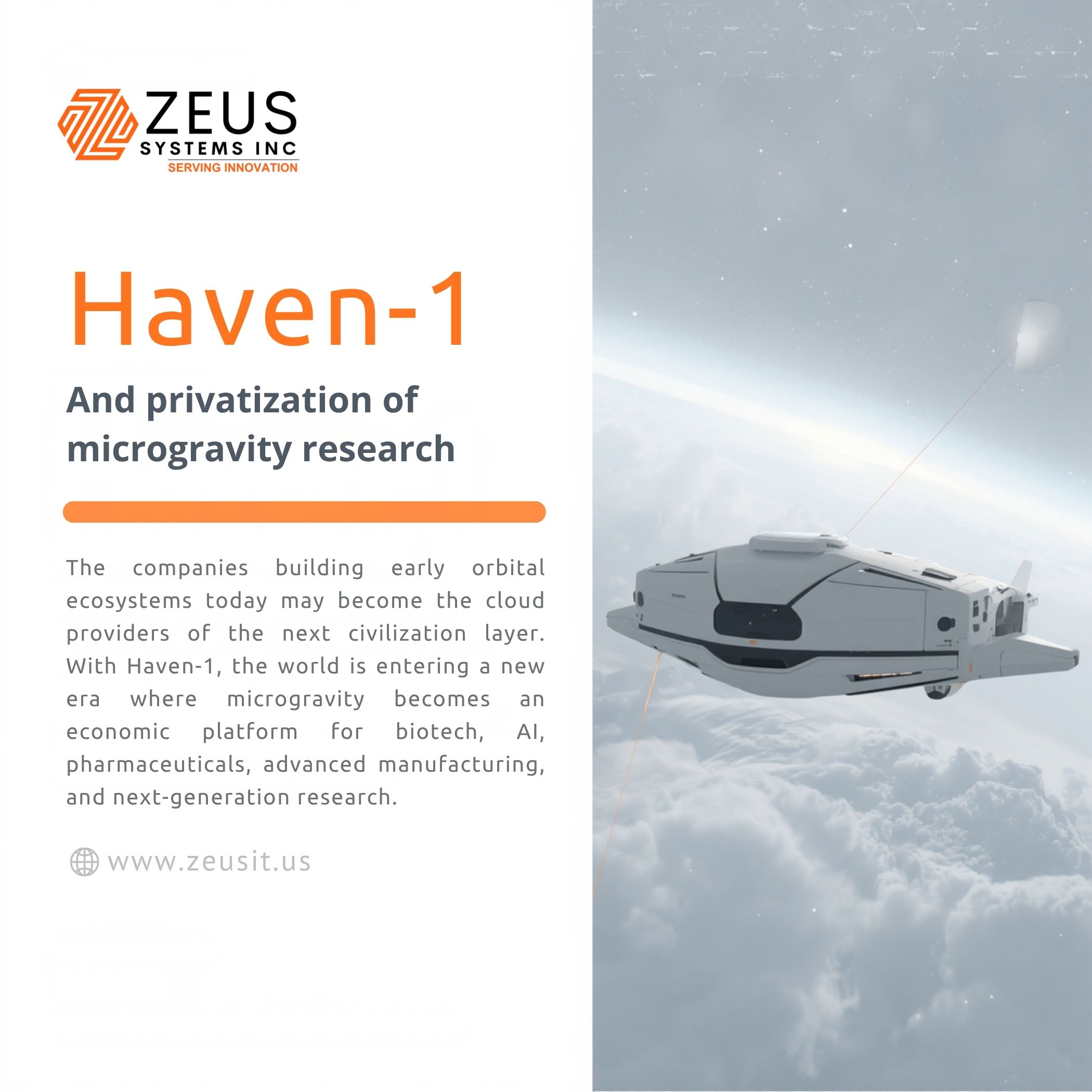
Haven-1 and the Privatization of Microgravity Research

For more than half a century, microgravity was a geopolitical luxury.
Access to orbit belonged to governments, military agencies, and a small circle of elite astronauts operating inside nation-state infrastructure like the NASA-backed International Space Station. Scientific experiments in space were rare, bureaucratically allocated, and politically symbolic. The orbital laboratory was never designed to become a scalable industrial economy. It was designed to prove technological superiority.
That era is ending.
The emergence of Vast Space and its commercial station Haven-1 represents something far larger than a new spacecraft. It marks the transition of low-Earth orbit from a state-controlled frontier into a programmable economic layer — one where pharmaceutical companies, AI labs, semiconductor firms, climate-tech startups, defense contractors, biotech unicorns, and cloud infrastructure giants can directly purchase orbital experimentation capacity the same way they purchase cloud compute today.
This is not merely “space commercialization.”
It is the privatization of gravity itself.
And once gravity becomes optional, entire industries begin redesigning matter from first principles.
According to reports from Vast Space, Haven-1 is intended to operate as the world’s first commercial microgravity research and manufacturing platform, offering dedicated payload slots, crew-assisted experimentation, and high-bandwidth Starlink-enabled connectivity for industrial research operations.
The implications are difficult to overstate.
The End of Government Monopoly in Orbit
The twentieth-century space economy was vertically centralized.
Governments built rockets. Governments controlled launch schedules. Governments selected astronauts. Governments determined scientific priorities. Governments owned the laboratories. Even private aerospace contractors operated as extensions of national objectives.
The ISS, despite its scientific brilliance, was fundamentally a diplomatic machine disguised as infrastructure.
Every experiment required:
• multinational approval,
• years-long review cycles,
• constrained launch manifests,
• rigid astronaut timelines,
• and political negotiation.
This model was survivable when space was symbolic.
It becomes catastrophic when space becomes economically productive.
The problem is simple: innovation cycles in AI, biotech, materials science, and quantum engineering move exponentially faster than government procurement systems.
A pharmaceutical company cannot wait four years for orbital protein crystallization access while venture-backed competitors iterate monthly.
A semiconductor company cannot pause next-generation wafer experimentation because astronaut scheduling windows are politically constrained.
A generative-AI robotics company cannot optimize autonomous manufacturing systems under Earth gravity alone if orbital production unlocks radically superior geometries.
The ISS was never built for the speed of private capital.
Haven-1 is.
Reports indicate the station will include modular laboratory systems with payload lockers capable of supporting healthcare, pharmaceutical, biotechnology, and advanced material research.
That changes the entire equation.
Because the moment orbital research becomes commercially schedulable, space stops being exploration.
It becomes infrastructure.
Why Microgravity Is Economically Revolutionary
Most people misunderstand microgravity.
They imagine astronauts floating.
Industries see something else entirely:
a manufacturing environment impossible to reproduce on Earth.
Gravity quietly distorts almost every industrial process humans use:
• crystal formation,
• fluid dynamics,
• combustion,
• alloy mixing,
• tissue growth,
• sedimentation,
• molecular layering,
• biological assembly,
• thermal distribution,
• nanostructure alignment.
Remove gravity, and matter behaves differently.
Sometimes radically differently.
Protein crystals grown in microgravity can achieve structural perfection difficult to produce on Earth. This matters because modern drug discovery increasingly depends on understanding molecular geometry with extreme precision.
Microgravity has already demonstrated promise in:
• cancer drug modeling,
• stem-cell growth,
• retinal tissue engineering,
• organoid development,
• fiber optics,
• semiconductor materials,
• ultra-pure optical manufacturing,
• advanced alloys,
• and biological printing.
Historically, these experiments were limited by access scarcity.
Now imagine orbital lab subscriptions.
Imagine:
• “Space-as-a-Service” APIs,
• cloud-scheduled orbital experimentation,
• AI-managed autonomous payload systems,
• pharmaceutical companies running parallel orbital trials,
• machine-learning models optimizing crystal growth in real time,
• and biotech firms continuously manufacturing high-value compounds in LEO.
The economic architecture begins resembling cloud computing more than aerospace.
That is the real disruption.
Haven-1 Is Not Competing With the ISS
It Is Competing With AWS
This is the conceptual mistake nearly every mainstream analysis makes.
People compare Haven-1 to the ISS because both are space stations.
But economically, Haven-1 resembles cloud infrastructure platforms far more than government habitats.
The ISS was a destination.
Haven-1 is a service layer.
Its real competitors are not astronauts.
Its competitors are:
• hyperscale compute providers,
• pharmaceutical R&D ecosystems,
• autonomous robotics firms,
• industrial simulation platforms,
• and next-generation manufacturing clouds.
The parallel to early cloud computing is almost exact.
Before cloud infrastructure:
• companies owned servers,
• infrastructure costs were enormous,
• experimentation was slow,
• and only large institutions could scale computing.
Then cloud providers abstracted complexity.
Suddenly startups could rent infrastructure instantly.
Innovation exploded.
Haven-1 could do the same for orbital science.
Instead of nations owning the entire stack:
• launch,
• station,
• crew,
• experimentation,
• data retrieval,
• manufacturing logistics,
companies will increasingly rent orbital capability on demand.
Microgravity becomes programmable.
And once a physical environment becomes programmable, software economics follow.
The Rise of Orbital Venture Capitalism
The next decade may produce an entirely new category of startup:
the orbital-native company.
Not aerospace companies.
Orbital-native companies.
There is a difference.
An aerospace company builds transportation systems.
An orbital-native company builds products that only make sense in microgravity.
This distinction matters enormously.
Examples may include:
• zero-gravity pharmaceutical synthesis,
• orbital semiconductor fabrication,
• biological tissue manufacturing,
• vacuum-native nanomaterials,
• AI-directed autonomous laboratories,
• ultra-pure optical fiber production,
• and radiation-trained machine-learning systems.
Today, most startups optimize for Earth constraints.
Tomorrow, some startups will optimize for physics environments unavailable on Earth.
That changes venture economics permanently.
The most valuable firms of the 2030s may not simply “operate in space.”
They may require space to exist.
Big Tech’s Silent Interest in Orbit
Publicly, major technology firms discuss AI.
Privately, many are increasingly confronting the physical limits of terrestrial infrastructure.
AI systems demand:
• unprecedented compute,
• advanced cooling,
• specialized materials,
• energy density,
• and high-performance manufacturing.
Space changes several of these variables.
Microgravity may enable:
• new chip architectures,
• ultra-efficient thermal systems,
• superior photonic materials,
• advanced communications hardware,
• and orbital data-processing systems.
Meanwhile, persistent low-latency connectivity via systems like SpaceX’s Starlink architecture could turn orbital stations into networked industrial nodes rather than isolated laboratories.
This is where the story becomes far bigger than “space tourism.”
The long-term objective is not rich civilians floating in orbit.
The long-term objective is creating an industrial layer above Earth.
Pharma May Become the First True Space Industry
Among all sectors, pharmaceuticals may experience the fastest transformation.
Why?
Because the economics are asymmetric.
A single breakthrough drug can generate tens of billions of dollars.
If orbital crystallization improves efficacy even marginally, the return on investment becomes extraordinary.
Microgravity allows researchers to study proteins and biological systems without convection and sedimentation effects interfering with molecular organization.
In practical terms:
• cleaner crystal structures,
• more precise molecular mapping,
• improved drug targeting,
• and potentially faster therapeutic development.
For pharmaceutical giants, this is not speculative science fiction.
It is competitive advantage.
And unlike national agencies, private companies optimize for monetizable breakthroughs, not symbolic missions.
That changes research velocity dramatically.
The Privatization of Scientific Priorities
This transition also introduces uncomfortable questions.
When governments dominate orbital research, science is at least partially aligned with public-interest frameworks.
When private infrastructure dominates, profitability becomes the filtering mechanism.
That creates risks:
• wealthy corporations monopolizing orbital access,
• pharmaceutical exclusivity around microgravity-developed treatments,
• defense-sector experimentation hidden behind commercial secrecy,
• proprietary biological datasets generated in orbit,
• and techno-economic inequality between nations with orbital access and those without it.
Space may evolve into the ultimate gated economy.
A future where:
• gravity becomes a premium feature,
• orbital patents dominate medicine,
• and access to certain manufacturing environments belongs only to trillion-dollar firms.
This is not impossible.
It is economically logical.
Historically, infrastructure ownership determines civilizational power.
Railroads did.
Electric grids did.
Cloud computing did.
AI compute clusters do.
Orbital infrastructure will too.
The New Geopolitics of Low-Earth Orbit
The geopolitical implications are staggering.
For decades, states controlled strategic space infrastructure.
Now venture-backed firms are entering the arena with extraordinary speed.
According to reporting, Vast aims to position Haven-1 as a precursor to larger commercial stations that could eventually replace portions of ISS functionality after its planned retirement around 2030.
That means governments may increasingly depend on private orbital infrastructure the same way modern economies depend on privately owned cloud platforms.
Imagine:
• national laboratories hosted on corporate stations,
• defense research conducted through commercial contracts,
• sovereign biotech projects running on privately managed orbital systems,
• or AI companies controlling the largest microgravity datasets in history.
The boundary between state power and corporate power begins dissolving.
This mirrors what happened with:
• social media,
• cloud infrastructure,
• semiconductor supply chains,
• and AI training systems.
But this time, the battleground is orbit.
Haven-1 and the Birth of the Orbital Attention Economy
There is another layer almost nobody discusses:
media psychology.
The first commercial station will become an always-on content ecosystem.
Think about the implications:
• livestreamed orbital science,
• influencer astronauts,
• branded experiments,
• pharmaceutical launches from orbit,
• AI-generated educational simulations,
• direct-to-consumer space commerce,
• entertainment partnerships,
• and persistent immersive spatial media.
Space is becoming culturally monetizable.
The ISS was institutionally distant.
Commercial stations will be emotionally optimized.
Human-centric interiors, panoramic domes, direct internet connectivity, and private-sector storytelling indicate that companies already understand this.
Orbit is becoming a consumer interface.
Why This Could Trigger the Largest Industrial Shift Since the Internet
The internet digitized information.
Commercial orbital infrastructure may industrialize physics environments.
That distinction matters.
The internet transformed how humans communicate.
Microgravity commercialization could transform how humans manufacture reality itself.
The downstream effects could reshape:
• medicine,
• materials science,
• robotics,
• energy systems,
• biotechnology,
• AI hardware,
• agriculture,
• and eventually off-world civilization.
What cloud computing did for software, orbital infrastructure may do for matter.
And just as early internet observers underestimated how profoundly networks would reorganize society, modern observers may be underestimating the significance of privatized microgravity.
Because the true breakthrough is not the station.
The breakthrough is the transition from rare access to persistent access.
Once access becomes persistent:
• experimentation compounds,
• industries emerge,
• capital accelerates,
• infrastructure scales,
• and entirely new economic categories appear.
Civilizations change when constraints disappear.
Microgravity may be one of the largest constraints removals in industrial history.
The Hidden Question Nobody Is Asking
The biggest question is not whether Haven-1 succeeds technically.
The deeper question is this:
Who owns the operating system of orbit?
Will low-Earth orbit become:
• an open scientific commons,
• a corporate cloud layer,
• a privatized industrial economy,
• a militarized logistics zone,
• or some unstable hybrid of all four?
Because history shows that whoever controls infrastructure eventually shapes culture, economics, law, and human possibility itself.
Railroads shaped nations.
Cloud platforms shaped the internet.
AI infrastructure is shaping cognition.
Commercial space stations may shape the next phase of civilization.
And for the first time in history, humanity is not merely exploring space.
It is beginning to industrialize the absence of gravity.
That is the true significance of Haven-1.
Not as a spacecraft.
But as the opening chapter of the post-terrestrial economy.

AI motion

The Silicon Soul: NVIDIA Jetson Thor and the Birth of “Physical AI

The centerpiece of this revolution is the NVIDIA Jetson Thor. Unlike its predecessors, Thor isn’t just a processor; it’s a dedicated “Physical AI” engine built on the Blackwell GPU architecture.

  • Computational Intensity: Delivering over 2,000 TFLOPS of 8-bit floating-point performance, Thor allows humanoids to process multimodal data—sight, sound, and touch—locally.
  • The “Sim2Real” Pipeline: Thor is designed to live in NVIDIA Isaac Sim. Robots like Richtech’s Dex are “born” in a digital twin of a factory, practicing a single grab motion 10 million times in a weekend before ever touching a physical bolt.
  • Transformer Engine: It features a specialized Transformer Engine to run the massive Vision-Language-Action (VLA) models required for robots to understand a command like, “Clean up the spill, but don’t wake the baby.”

Realbotix: The Emotional Frontier of Domestic Autonomy

While most competitors chase industrial utility, Realbotix is focused on the most complex environment of all: the human home.

Production-Ready Trials

In April 2026, Realbotix began delivering a fleet of 19 production-ready humanoids (the M-Series) for real-world trials. Unlike the uncanny valley residents of years past, these units utilize Vinci AI Vision to navigate the chaos of a lived-in residence—dog toys, shifting furniture, and varying light levels.

The Human Interface

The M-Series is modular. A user can swap “personality” and “aesthetic” panels, but the core remains constant: a Jetson Thor-powered brain capable of long-form conversational AI and fine-motor task execution. They aren’t just “bots”; they are domestic interfaces designed to bridge the gap between static smart homes and active assistance.

Richtech Robotics: The Industrial “Dex”terity

If Realbotix is the heart, Richtech is the hands. Their flagship humanoid, Dex, is currently moving into industrial trials, redefining what “labor” looks like on the factory floor.

Hybrid Mobility

In a groundbreaking move, Richtech opted for a wheeled AMR (Autonomous Mobile Robot) base rather than bipedal legs for Dex. This wasn’t a compromise; it was a tactical decision for 8-hour battery life and heavy-load stability.

Adaptive Manufacturing

Powered by Thor, Dex doesn’t need to be hard-coded. It observes a human worker, maps the task via Isaac Sim, and adapts. Its dual production arms feature modular end-effectors—clamping a car door one hour and sorting micro-electronics the next.

XELA Robotics: The Gift of Tactile Consciousness

The “missing link” in robotics has always been touch. A robot can see a strawberry, but without tactile feedback, it will crush it. This is where XELA Robotics changes the game.

The uSkin Breakthrough

XELA’s uSkin technology is a soft, high-density tactile sensor skin that mimics human skin’s ability to measure pressure and shear forces.

  • Integration: Both Realbotix and Richtech have begun integrating XELA’s sensors into their fingertips and palms.
  • The Result: This allows the robots to perform “blind” tasks—reaching into a dark bin to find a specific part or feeling the tension of a cloth while folding laundry. It’s no longer about pre-programmed paths; it’s about sensory reaction.

The 2026 Reality: Trials to Triumphs

We are currently witnessing the Great Trial Phase.

  1. Factories: Richtech’s Dex is being deployed in US-based manufacturing hubs to combat labor shortages.
  2. Service: Realbotix’s “Melody” (M-Series) is acting as a “Human Interface” at massive summits like Bitcoin 2026, moving beyond kiosks to actual social interaction.

Data Sovereignty: With the power of Jetson Thor, these robots process their environment on-edge. This means your domestic data (the layout of your home, your conversations) never has to leave the robot’s local silicon, solving the massive privacy hurdle that previously stalled home-bot adoption.

Space Technology

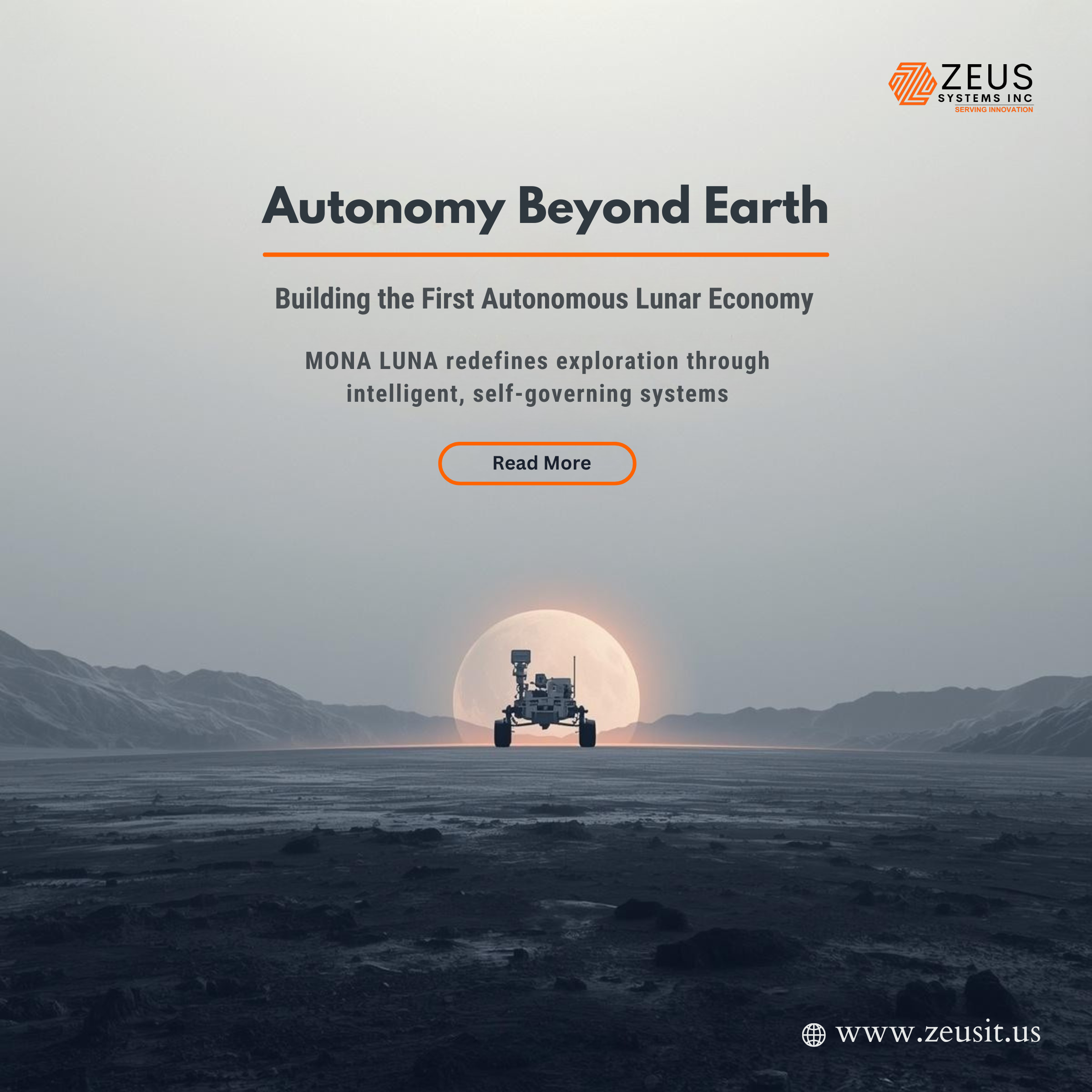
Space Lunar Rovers: MONA LUNA’s AI Navigation Conquers Uneven Terrain for Resource Mining

For decades, lunar exploration has been constrained by two fundamental challenges: extreme terrain unpredictability and dependence on human-controlled operations. While missions led by organizations like NASA and ISRO have successfully demonstrated robotic mobility on the Moon, the next leap forward demands something radically different complete autonomy under hostile, unknown conditions.

Enter MONA LUNA  a next-generation AI-powered lunar rover system designed not just to explore, but to independently mine, adapt, and build the foundations of permanent off-world habitats without human intervention.

This is not an incremental improvement. It represents a paradigm shift: from remote-controlled machines to self-governing extraterrestrial industrial agents.

The Problem: The Moon Is Not Just Empty It’s Unpredictable

Unlike Earth, the Moon presents a chaotic and unforgiving landscape:

  • Jagged regolith with inconsistent density
  • Craters with unstable slopes exceeding 30 degrees
  • Electrostatic dust that interferes with sensors
  • Extreme temperature gradients (-173°C to +127°C)
  • Communication delays and blackout zones

Traditional rovers rely heavily on pre-mapped routes and human decision loops, which break down in such environments. Even slight terrain miscalculations can lead to immobilization a fate suffered by multiple historical missions.

MONA LUNA addresses this not by improving mapping but by eliminating the need for certainty altogether.

MONA LUNA: A Self-Evolving Intelligence System

At its core, MONA LUNA is not a rover it is a distributed AI cognition platform embedded within a physical mobility system.

Key Architectural Layers

  1. Perceptual Layer (LUNA-SENSE)
    • Multi-spectral terrain scanning
    • Subsurface radar for detecting voids and ice deposits
    • Dust-penetrating LiDAR alternatives
  2. Cognitive Layer (MONA Core AI)
    • Real-time terrain reasoning using probabilistic physics models
    • Self-learning navigation policies via reinforcement evolution
    • Contextual risk assessment (not just obstacle avoidance)
  3. Execution Layer (Adaptive Mobility System)
    • Shape-shifting wheel-leg hybrid actuators
    • Dynamic traction redistribution
    • Micro-adjustment balancing at millisecond intervals
  4. Swarm Intelligence Protocol (Optional Multi Rover Mode)
    • Collective decision-making without central control
    • Resource allocation based on emergent needs
    • Failure compensation via peer adaptation

AI Navigation: Beyond Pathfinding

Traditional navigation answers: “How do I get from A to B?”
MONA LUNA instead asks:
“What is the safest, most energy-efficient, and mission-optimal way to exist within this terrain?”

1. Terrain Understanding as a Living Model

Instead of static mapping, MONA LUNA builds a continuously evolving terrain consciousness:

  • Each grain interaction updates soil behavior models
  • Slopes are not angles they are probabilistic collapse zones
  • Shadows are analyzed for temperature traps and energy risks

2. Predictive Failure Simulation

Before taking a step, the AI runs thousands of micro-simulations:

  • Wheel sink probability
  • Slip vectors under varying torque
  • Structural stress under uneven load

This enables preemptive adaptation, not reactive correction.

3. Emotional AI Without Emotion

A groundbreaking concept: MONA LUNA uses synthetic “survival instincts”:

  • “Caution bias” increases in unknown zones
  • “Exploration drive” rises when resource probability spikes
  • “Fatigue modeling” limits risk when energy reserves drop

This mimics biological resilience without human input.

Conquering Uneven Terrain: The Mobility Revolution

MONA LUNA’s hardware is inseparable from its intelligence.

Hybrid Wheel-Leg System

  • Wheels morph into clawed structures for steep climbs
  • Independent articulation allows movement even if 50% of contact points fail
  • Capable of traversing:
    • Loose dust plains
    • Rocky ejecta fields
    • Crater walls

Micro-Adaptive Suspension

Instead of passive suspension:

  • Each joint reacts in real time to terrain feedback
  • AI redistributes weight dynamically
  • Prevents tipping even on shifting surfaces

Self-Recovery Mechanisms

If immobilized:

  • The rover reconfigures its geometry
  • Uses controlled vibrations to escape regolith traps
  • Calls swarm units (if available) for cooperative extraction

Resource Mining: The True Mission

Exploration is no longer the goal resource independence is.

Target Resources

  • Water ice (for fuel and life support)
  • Helium-3 (future fusion potential)
  • Rare earth metals

Autonomous Mining Workflow

  1. Detection
    Subsurface scanning identifies high-probability resource zones
  2. Validation
    AI performs micro-drills and analyzes samples in situ
  3. Extraction
    • Precision excavation minimizes energy waste
    • Dust suppression techniques prevent contamination
  4. Processing
    Onboard refinement into usable forms (e.g., water extraction, oxygen separation)
  5. Storage or Deployment
    Materials are either stored or used immediately for infrastructure

Zero-Human Oversight: The Ultimate Leap

The defining feature of MONA LUNA is its ability to operate indefinitely without human control.

How This Is Achieved

  • Autonomous Goal Setting
    The system redefines mission priorities based on environmental feedback
  • Self-Healing Software
    AI rewrites parts of its own code within safe boundaries
  • Hardware Redundancy Intelligence
    Instead of backup systems, it uses adaptive repurposing
    (e.g., converting a failed sensor into a limited-function substitute)
  • Ethical Constraint Layer
    Ensures mission alignment without human intervention

Building Permanent Off-World Habitats

MONA LUNA is not just a miner it is a precursor to extraterrestrial civilization.

Infrastructure Capabilities

  • Autonomous construction using regolith-based 3D printing
  • Terrain leveling for landing zones
  • Subsurface habitat carving for radiation protection

Energy Systems

  • Solar field deployment optimized by AI
  • Thermal energy storage in lunar regolith

Habitat Preparation

  • Oxygen generation from lunar soil
  • Water extraction and storage
  • Structural integrity testing for human arrival

The Bigger Vision: A Self-Sustaining Lunar Ecosystem

Imagine a network of MONA LUNA units:

  • Mining resources continuously
  • Building infrastructure autonomously
  • Repairing and replicating systems
  • Expanding operations without Earth intervention

This transforms the Moon into:

A self-sustaining industrial outpost before humans even arrive.

Challenges and Ethical Considerations

Risks

  • AI decision drift over long durations
  • Resource over-extraction without oversight
  • System-wide failure in swarm logic

Ethical Questions

  • Should AI have autonomy in extraterrestrial environments?
  • Who owns resources mined without human presence?
  • Can self-evolving systems remain aligned with human intent?

These questions will define not just space exploration but the future of intelligence itself.

Conclusion: The Dawn of Autonomous Cosmic Industry

MONA LUNA represents a fundamental shift:

  • From exploration exploitation (in the constructive sense)
  • From control trust in autonomous intelligence
  • From temporary missions  permanent presence

If successful, it will mark the moment humanity stopped visiting space and started living and building beyond Earth.

it / op fusion industry

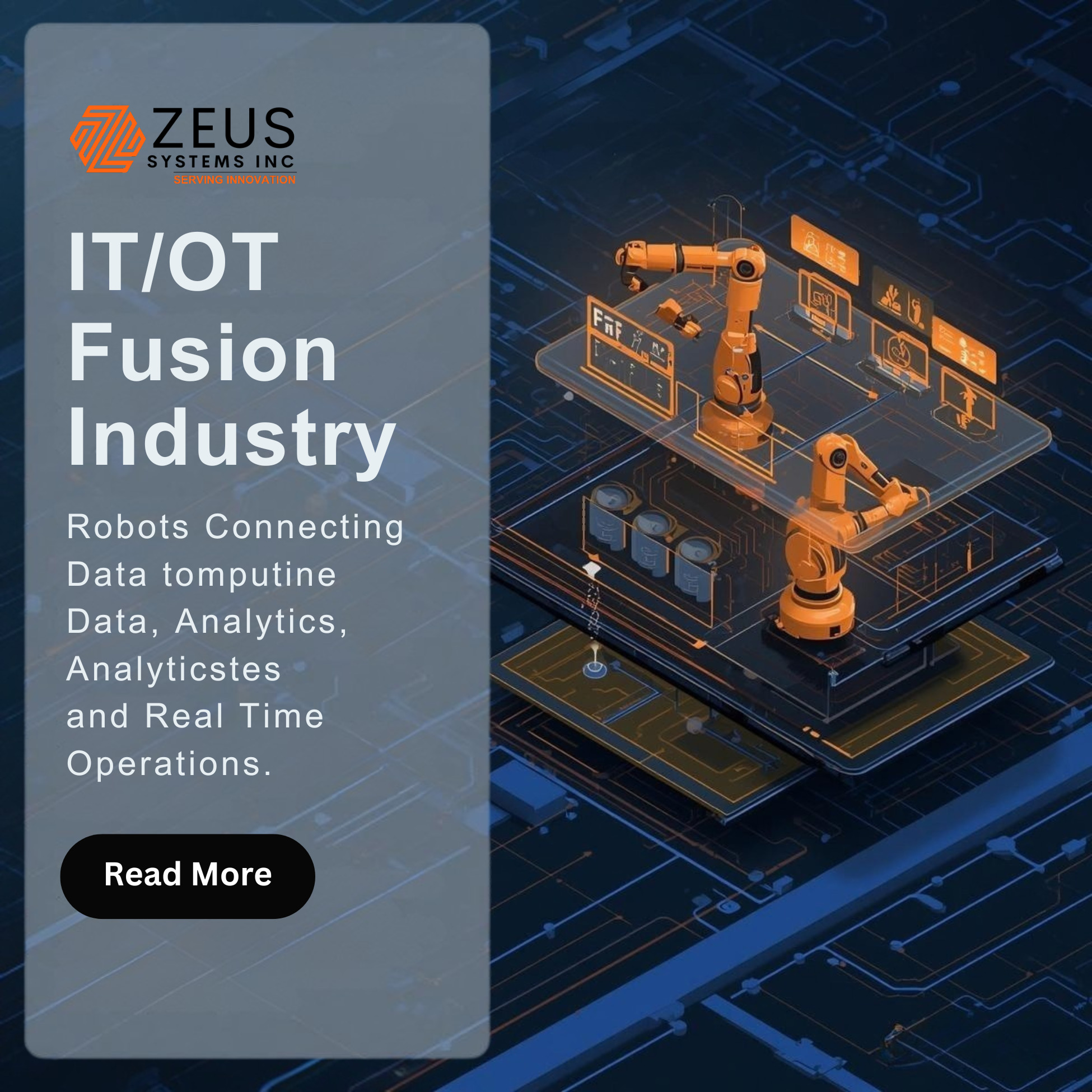
IT/OT Fusion in Industry

For decades, the architecture of industrial enterprises followed a rigid separation.
Information Technology (IT) governed data, analytics, and enterprise systems, while Operational Technology (OT) controlled the physical processes of machines, robotics, and industrial automation.

This separation once made sense.

IT systems were designed for information processing, scalability, and decision-making, while OT systems were engineered for deterministic control, reliability, and real-time physical operations.

But Industry 4.0 is dismantling this boundary.

Factories are no longer static production sites; they are becoming living computational ecosystems—networks of robots, sensors, analytics engines, and autonomous decision systems.

At the center of this transformation is IT/OT fusion, where versatile industrial robots combine real-time operational control with cloud-scale data analytics.

This convergence is driving a new wave of industrial automation valued at tens of billions of dollars globally, enabling capabilities that were previously impossible:

  • Autonomous predictive maintenance
  • Self-optimizing production lines
  • Real-time supply chain adaptation
  • Digital twins and simulation-driven manufacturing
  • Self-healing factory infrastructure

In this new industrial paradigm, robots are no longer just mechanical arms.

They are intelligent cyber-physical agents.

The Evolution from Automation to Intelligent Autonomy

Traditional industrial robots were deterministic machines.

They executed predefined sequences:

Pick → Place → Weld → Repeat

Their behavior was governed by:

  • PLC controllers
  • hard-coded motion paths
  • static process parameters

Any change required manual reprogramming.

This architecture created three major limitations:

  1. Lack of adaptability
  2. Limited process visibility
  3. Reactive maintenance

Factories could only respond to problems after they occurred.

The rise of Industrial Internet of Things (IIoT) and advanced analytics is changing this paradigm.

Today’s robotic systems operate within a data-rich environment where machines continuously exchange operational data with enterprise systems and analytics platforms.

Instead of isolated equipment, factories are becoming connected intelligence networks.

What IT/OT Fusion Actually Means

To understand the magnitude of this transformation, we must understand the difference between the two worlds being fused.

Operational Technology (OT)

OT refers to systems that interact with physical processes.

Examples include:

  • PLCs (Programmable Logic Controllers)
  • SCADA systems
  • industrial robots
  • machine sensors
  • manufacturing equipment

OT systems are optimized for:

  • real-time control
  • reliability
  • deterministic response

Information Technology (IT)

IT systems manage:

  • enterprise data
  • analytics
  • cloud infrastructure
  • ERP/MES platforms
  • machine learning models

IT focuses on:

  • scalability
  • data processing
  • integration
  • decision intelligence

IT/OT Convergence

IT/OT convergence integrates these domains so that operational machines generate real-time data that feeds analytics systems, which in turn influence machine behavior.

This integration enables:

  • predictive maintenance
  • performance optimization
  • adaptive production scheduling
  • real-time decision-making.

In essence:

OT executes.
IT analyzes.
Fusion allows machines to self-optimize.

The Rise of Versatile Industrial Robots

The next generation of robotics is fundamentally different from the rigid industrial robots of the past.

These machines are versatile robotic platforms, characterized by:

1. Sensor-rich perception

Robots are equipped with:

  • vibration sensors
  • thermal cameras
  • torque sensors
  • LiDAR
  • vision systems

These sensors generate massive streams of operational data.

2. Edge computing capabilities

Instead of sending all data to the cloud, robots process information locally using edge AI processors.

This enables sub-millisecond decision loops.

3. Cloud-connected intelligence

Operational data flows into cloud analytics systems where machine learning models detect patterns across entire factory networks.

4. Autonomous decision loops

Robots can adjust:

  • motion paths
  • production speed
  • calibration
  • maintenance schedules

This creates a continuous feedback loop between digital analytics and physical action.

Architecture of a Self-Adaptive Factory

The modern adaptive factory operates through four interconnected layers.

1. Sensing Layer (OT Infrastructure)

This layer includes:

  • industrial sensors
  • robots
  • PLC controllers
  • vision systems

Machines generate operational data such as:

  • vibration frequency
  • motor temperature
  • cycle time
  • torque loads

2. Edge Intelligence Layer

Edge gateways process data locally using:

  • AI inference models
  • anomaly detection algorithms
  • streaming analytics

This layer enables instant operational decisions.

3. Cloud Analytics Layer

Aggregated factory data is analyzed using:

  • machine learning
  • predictive models
  • digital twins
  • data lakes

These systems detect patterns across entire production lines.

4. Control Feedback Layer

Insights generated by analytics are sent back to machines.

Robots then autonomously adjust:

  • process parameters
  • operational timing
  • maintenance intervals

This creates a closed-loop adaptive manufacturing system.

Predictive Maintenance: The First Major Breakthrough

One of the most transformative outcomes of IT/OT fusion is predictive maintenance.

Traditional maintenance models fall into three categories:

ModelApproachDrawback
ReactiveFix after failureDowntime
PreventiveFixed schedule maintenanceOver-maintenance
PredictiveData-driven predictionsRequires analytics

Predictive maintenance analyzes sensor data such as:

  • vibration patterns
  • temperature fluctuations
  • electrical load variations

These signals reveal early signs of mechanical degradation.

Machine learning models can detect failure patterns days or weeks before breakdowns occur.

This enables factories to schedule maintenance before failure happens, dramatically reducing downtime.

Research in intelligent manufacturing demonstrates how AI systems can combine multiple sensor streams to detect tool wear, equipment degradation, and operational anomalies with high accuracy.

Autonomous Failure Anticipation

The next step beyond predictive maintenance is autonomous failure anticipation.

In this model, the system not only predicts failures but also acts automatically.

Example scenario:

  1. A robot detects abnormal vibration in a motor bearing.
  2. Edge AI confirms anomaly patterns.
  3. Cloud analytics predicts failure in 96 hours.
  4. The system automatically:
    • orders replacement parts
    • schedules maintenance during planned downtime
    • adjusts production load to reduce stress on the machine

This is known as a self-healing production environment.

Factories transition from maintenance planning to autonomous operational resilience.

Digital Twins and Simulation-Based Manufacturing

Another powerful outcome of IT/OT convergence is the rise of digital twins.

A digital twin is a virtual replica of a physical factory or machine.

It continuously synchronizes with real-world operational data.

This allows manufacturers to:

  • simulate production changes
  • test robotics configurations
  • predict process bottlenecks
  • optimize workflows

Modern robotics deployments increasingly rely on digital simulation before physical installation to anticipate performance issues and optimize workflows.

This dramatically reduces deployment risk and commissioning time.

Real-Time Factory Adaptation

The most revolutionary capability of IT/OT fusion is real-time adaptive manufacturing.

Factories can now respond dynamically to:

  • supply chain disruptions
  • demand fluctuations
  • equipment health changes
  • energy optimization requirements

Example scenario:

A sudden spike in product demand triggers:

  1. ERP systems adjusting production targets
  2. MES systems reallocating resources
  3. Robots modifying task assignments
  4. Automated scheduling across assembly lines

The result is self-adjusting production ecosystems.

Market Momentum: The Multi-Billion Dollar Transformation

The economic impact of IT/OT convergence is enormous.

Several industry forces are driving this growth:

Industrial robotics expansion

Factories worldwide are rapidly deploying advanced robotics systems.

Smart manufacturing initiatives

Governments and enterprises are investing heavily in Industry 4.0 programs.

AI-driven automation

Machine learning models now power predictive operations.

Edge computing adoption

Processing data at the machine level reduces latency and bandwidth demands.

Together, these forces are pushing robotics installations into a multi-billion-dollar global market, with adaptive and intelligent robotics representing the fastest growing segment.

Organizational Transformation: The Human Factor

Technology alone cannot drive IT/OT fusion.

It also requires organizational transformation.

Historically:

  • IT teams focused on enterprise systems
  • OT teams focused on industrial reliability

These groups operated in separate silos.

Industry discussions often highlight that the biggest challenge in IT/OT convergence is not technical compatibility but organizational alignment and collaboration between teams.

Successful organizations create cross-disciplinary engineering teams that include:

  • software engineers
  • robotics specialists
  • data scientists
  • industrial engineers

The factory of the future is as much a software system as a mechanical one.

Cybersecurity Challenges in Converged Environments

Integrating IT and OT also introduces new cybersecurity risks.

Traditional OT systems were:

  • isolated
  • air-gapped
  • closed networks

Connecting them to cloud platforms and enterprise networks expands the attack surface.

A compromised industrial control system could disrupt production or damage equipment.

Therefore modern IT/OT architectures require:

  • zero-trust security models
  • network segmentation
  • real-time anomaly detection
  • secure industrial communication protocols

Security becomes a core pillar of digital manufacturing infrastructure.

The Emergence of Autonomous Factories

The long-term trajectory of IT/OT fusion leads to a radical concept:

The Autonomous Factory

In an autonomous factory:

  • machines self-monitor
  • robots self-adjust
  • systems self-heal
  • production self-optimizes

Human engineers transition from operators to orchestrators of intelligent systems.

Factories become adaptive cyber-physical organisms capable of evolving in real time.

The Next Frontier: Cognitive Robotics

The next phase of industrial robotics will introduce cognitive capabilities.

Future robots will integrate:

  • generative AI planning
  • multimodal perception
  • reinforcement learning
  • real-time digital twins

These systems will not simply execute instructions.

They will reason about manufacturing objectives.

For example:

Instead of programming:

Pick component A → place in slot B

Engineers will specify goals:

Optimize assembly throughput with minimal energy usage

The robotic system will determine how to achieve that objective autonomously.

Conclusion: The Industrial Intelligence Era

The convergence of IT and OT is not merely a technological upgrade.

It represents the birth of industrial intelligence.

By merging:

  • robotics
  • data analytics
  • AI
  • edge computing
  • cloud platforms

Factories are evolving into self-aware production ecosystems.

Versatile robots are the physical embodiment of this transformation.

They translate digital insight into mechanical action.

As these systems mature, the future factory will no longer rely on static programming or reactive maintenance.

Instead, it will function as a living, learning system capable of anticipating problems, adapting to change, and continuously optimizing itself.

The fusion of IT and OT is not simply the next phase of automation. It is the foundation of the autonomous industrial age.

bio robotics

White Rabbit Bio-Robotics

The Penguin-Inspired Lab Robot That Could Redefine Autonomous Science

The Convergence of Biology, AI Cognition, and Robotics

For decades, laboratory automation has followed a predictable trajectory: robotic arms, conveyor systems, and sterile automated workstations performing repetitive tasks with mechanical precision. But a new wave of bio-inspired robotics and embodied artificial intelligence is beginning to redefine how machines interact with the physical world.

One experimental concept emerging at the intersection of these disciplines is White Rabbit Bio-Robotics, a next-generation hybrid robotic platform envisioned by the innovation lab Penguins Innovate. The concept fuses organic-inspired locomotion, AI reasoning, and vision-language-action cognition to produce an acrobatic robotic system capable of performing delicate laboratory tasks with unprecedented agility.

The robot’s intelligence layer is powered by a cognitive framework inspired by Vision-Language-Action (VLA) models, which integrate perception, language reasoning, and physical action in a unified system. These architectures enable robots to interpret instructions, understand their environment, and execute complex physical tasks autonomously.

In essence, White Rabbit represents a radical shift: from rigid automation to embodied robotic intelligence.

The Birth of Bio-Robotic Penguins

Traditional lab robots resemble industrial machinery—heavy, precise, but fundamentally limited. They perform predefined tasks but struggle with unstructured environments.

Researchers behind the White Rabbit concept took a different approach.

Instead of designing robots like machines, they began designing them like animals.

The inspiration came from one of nature’s most efficient movement specialists: the penguin. Penguins combine stability, balance, and energy efficiency in harsh environments. Their gait allows them to traverse ice, swim underwater, and maintain remarkable equilibrium.

This biological insight led to a new robotics architecture: Bio-Robotic Penguins.

Unlike wheeled robots or rigid robotic arms, the White Rabbit robot moves using a bio-mechanical gait system modeled after penguin locomotion. Its structure integrates:

  • dynamic balance control
  • adaptive limb articulation
  • compliant materials that mimic muscle-tendon elasticity

The result is a robot capable of micro-precision movements combined with acrobatic balance—a capability rarely seen in lab automation systems.

The Spirit AI Cognition Layer

Physical agility alone is not enough. Laboratory work requires context, interpretation, and reasoning.

To achieve this, White Rabbit integrates a hypothetical cognitive architecture known as Spirit AI, a vision-language-action intelligence system.

VLA models are a rapidly evolving category of AI that merges perception, language understanding, and robotic control into a single neural system. These models can understand natural language instructions, interpret visual scenes, and translate them directly into motor actions.

For example, instead of programming a robot with rigid instructions, researchers could simply tell White Rabbit:

“Prepare three microfluidic samples and place them in the centrifuge.”

The Spirit AI system would then:

  1. Visually identify the required lab equipment.
  2. Plan the sequence of actions.
  3. Execute precise motor movements to complete the task.

The fusion of language, vision, and robotics closes the gap between human instruction and machine execution.

Organic Motion: The Secret to Laboratory Precision

One of the most fascinating aspects of White Rabbit is its organic movement system.

Most robots rely on rigid joints and servo motors. While precise, these systems struggle with delicate manipulation tasks such as:

  • pipetting microscopic volumes
  • handling fragile biological samples
  • adjusting instruments in tight laboratory spaces

White Rabbit introduces adaptive soft-actuator joints, which behave more like biological muscles.

These actuators allow the robot to perform:

  • smooth micro-movements
  • dynamic balance adjustments
  • real-time force control

The penguin-inspired locomotion combined with soft robotics enables acrobatic precision, allowing the robot to navigate cluttered laboratory environments while maintaining stability.

Autonomous Laboratory Intelligence

In a typical biotech laboratory, researchers perform hundreds of repetitive tasks daily:

  • sample preparation
  • microscopy adjustments
  • reagent mixing
  • instrument calibration

White Rabbit is designed to automate these tasks using context-aware autonomy.

Its sensor suite includes:

  • multi-angle vision systems
  • tactile sensors
  • environmental monitoring
  • spatial mapping algorithms

The system continuously builds a digital twin of the laboratory environment, enabling the robot to adapt to changing conditions.

This level of awareness is critical because laboratory environments are inherently dynamic—equipment moves, experiments change, and protocols evolve.

A New Paradigm: Robotic Scientists

The ultimate goal of White Rabbit is not merely automation.

It is robotic scientific collaboration.

Future iterations could allow the robot to participate in research workflows by:

  • proposing experimental setups
  • optimizing lab protocols
  • autonomously running experiments overnight

Combined with advanced AI reasoning systems, such robots could dramatically accelerate discovery in fields such as:

  • pharmaceutical development
  • synthetic biology
  • materials science
  • climate research

This vision aligns with emerging research in embodied reasoning, where AI systems combine cognitive reasoning with physical interaction to perform complex tasks.

The Hardware Architecture

The White Rabbit system is designed around a modular hardware platform.

Key components include:

1. Bio-Dynamic Locomotion Frame

  • penguin-inspired balance mechanics
  • compliant joint structures

2. Multi-Modal Sensor Array

  • high-resolution cameras
  • depth sensors
  • tactile feedback sensors

3. Neural Robotics Processor

  • edge AI processor for real-time inference
  • GPU acceleration for vision models

4. Environmental Mapping System

  • spatial AI
  • object recognition

5. Adaptive Manipulation Arms

  • soft robotic grippers
  • precision pipetting modules

From Smart Devices to Embodied AI

The idea of intelligent physical devices is already beginning to emerge in consumer technology.

For example, the smart AI device white rabbit smart automation device, developed by Penguins Innovate, demonstrates how AI systems can combine sensors, cameras, and automation to interact with users and adapt to their environment. The device can track movement, respond to voice commands, and integrate multiple smart-home functions into a single AI-driven system.

While designed for consumer environments, such technologies hint at how AI-driven hardware could evolve toward fully autonomous embodied systems.

White Rabbit Bio-Robotics represents the next step in that trajectory.

Why Bio-Robotics Is the Future

Biology has spent millions of years optimizing motion, balance, and efficiency.

Robotics researchers are increasingly realizing that the most advanced machines may not look like machines at all.

Instead, they may resemble living organisms.

Bio-robotic systems offer several advantages:

Energy efficiency
Organic motion requires less energy than rigid mechanical systems.

Adaptability
Soft structures can handle unpredictable environments.

Precision
Muscle-like actuators enable delicate manipulation.

These traits make bio-robotics particularly suited for scientific laboratories and healthcare environments.

The Coming Age of Autonomous Laboratories

Imagine a laboratory operating 24 hours a day with minimal human intervention.

Researchers define hypotheses.

Robots design experiments.

AI systems analyze results.

White Rabbit-style robots could serve as the physical workforce of this autonomous research ecosystem.

Such systems could dramatically accelerate discovery timelines.

Drug discovery that currently takes 10–15 years might shrink to months.

Materials development could happen in continuous automated cycles.

Challenges Ahead

Despite its promise, the path toward bio-robotic laboratory assistants is complex.

Several technical hurdles remain:

Robust reasoning in physical environments

AI must reliably translate abstract instructions into precise actions.

Safety in biological laboratories

Robots must operate safely around hazardous materials.

Standardized robotic protocols

Laboratory workflows vary widely between institutions.

However, rapid advances in AI and robotics suggest these challenges may soon be overcome.

The Next Frontier of Robotics

White Rabbit Bio-Robotics represents a powerful idea:

robots that move like animals, think like scientists, and work like tireless laboratory assistants.

The fusion of bio-inspired mechanics, embodied AI cognition, and vision-language-action intelligence could usher in a new era where machines do more than automate tasks—they participate in discovery.

If realized, systems like White Rabbit may mark the beginning of the Autonomous Science Revolution. And in that future, laboratories may no longer be run solely by human researchers—but by collaborative ecosystems of humans and intelligent bio-robots.

cross disciplinary synthesis papers

Cross-Disciplinary Synthesis Papers

Cross-Disciplinary Synthesis Papers: Integrating Cognitive Science, Design Ethics, and Systems Engineering to Reframe AI Safety and Reliability

The rapid integration of AI into socio-technical systems reveals a fundamental truth: traditional safety frameworks are no longer adequate. AI is not just a software artifact — it interacts with human cognition, social systems, and complex engineering infrastructures in nonlinear and unpredictable ways. To confront this reality, we propose a New Synthesis Paradigm for AI Safety and Reliability — one that inherently bridges cognitive science, design ethics, and systems engineering. This triadic synthesis reframes safety from a risk-mitigation checklist into a dynamic, embodied, human-centered, ethically grounded, system-adaptive discipline. This article identifies theoretical gaps across each domain and proposes integrative frameworks that can drive future research and responsible deployment of AI.

1. Introduction — Why a New Synthesis is Required

For decades, AI safety efforts have been dominated by technical compliance (robustness metrics, verification proofs, adversarial testing). These are necessary but insufficient. The real challenges AI poses today are fundamentally human-system challenges — failures that emerge not from code errors alone, but from how systems interact with human cognition, values, and complex environments.

Three domains — cognitive science, design ethics, and systems engineering — offer deep insights into human–machine interaction, ethical value structures, and complex reliability dynamics, respectively. Yet, these domains largely operate in isolation. Our core thesis is that without a synthesized meta-framework, AI safety will continue to produce fragmented solutions rather than robust, anticipatory intelligence governance.

2. Cognitive Dynamics of Trustworthy AI

2.1 Human Cognitive Models vs. AI Decision Architectures

AI systems today are optimized for performance metrics — accuracy, latency, throughput. Human cognition, however, functions on heuristic reasoning, bounded rationality, and social meaning-making. When AI decisions contradict cognitive expectations, trust fractures.

  • Proposal: Cognitive Alignment Metrics (CAM) — a new set of safety indicators that measure how well AI explanations, outputs, and interactions fit human cognitive models, not just technical correctness.
  • Groundbreaking Aspect: CAM proposes internal cognitive resonance scoring, evaluating AI behavior based on how interpretable and psychologically meaningful decisions are to different cognitive archetypes.

2.2 Cognitive Load and Safety Thresholds

Humans overwhelmed by AI complexity make more errors — a form of interactive unreliability that current reliability engineering ignores.

  • Proposal: Establish Cognitive Load Safety Thresholds (CLST) — formal limits to AI complexity in user interfaces that exceed human processing capacities.

3. Ethics by Design — Beyond Fairness and Cost Functions

Current ethical AI debates center on fairness metrics, bias audits, or constrained optimization with ethical weighting. These remain too static and decontextualized.

3.1 Embedded Ethical Agency

AI should not merely avoid bias; it should participate in ethical reasoning ecosystems.

  • Proposal: Ethics Participation Layers (EPL) — modular ethical reasoning modules that adapt moral evaluations based on cultural contexts, stakeholder inputs, and real-time consequences, not fixed utility functions.

3.2 Ethical Legibility

An AI is “safe” only if its ethical reasoning is legible — not just explainable but ethically interpretable to diverse stakeholders.

  • This introduces a new field: Moral Transparency Engineering — the design of AI systems whose ethical decision structures can be audited and interrogated by humans with different moral frameworks.

4. Systems Engineering — AI as Dynamic Ecology

Traditional systems engineering treats components in well-defined interaction loops; AI introduces non-stationary feedback loops, emergent behaviors, and shifting goals.

4.1 Emergent Coupling and Cascade Effects

AI systems influence social behavior, which then changes input distributions — a feedback redistribution loop.

  • Proposal: Emergent Reliability Maps (ERM) — analytical tools for modeling how AI induces higher-order effects across socio-technical environments. ERMs capture cascade dynamics, where small changes in AI outputs can generate large, unintended system-wide effects.

4.2 Adaptive Safety Engineering

Safety is not a static constraint but a continually evolving property.

  • Introduce Safety Adaptation Zones (SAZ) — zones of system operation where safety indicators dynamically reconfigure according to environment shifts, human behavior changes, and ethical context signals.

5. The Triadic Synthesis Framework

We propose Cognitive–Ethical–Systemic (CES) Synthesis, which merges cognitive alignment, ethical participation, and systemic dynamics into a unified operational paradigm.

5.1 CES Core Principles

  1. Human-Centered Predictive Modeling: AI must be assessed not just for correctness, but for human cognitive resonance and predictive intelligibility.
  2. Ethical Co-Governance: AI systems should embed ethical reasoning capabilities that interact with human stakeholders in real-time, including mechanisms for dissent, negotiation, and moral contestation.
  3. Dynamic Systems Reliability: Reliability is a time-adaptive property, contingent on feedback loops and environmental coupling, requiring continuous monitoring and adjustment.

5.2 Meta-Safety Metrics

We propose a new set of multi-dimensional indicators:

  • Cognitive Affinity Index (CAI)
  • Ethical Responsiveness Quotient (ERQ)
  • Systemic Emergence Stability (SES)

Together, they form a safety reliability vector rather than a scalar score.

6. Implementation Roadmap (Research Agenda)

To operationalize the CES Framework:

  1. Build Cognitive Affinity Benchmarks by collaborating with neuroscientists and UX researchers.
  2. Develop Ethical Participation Libraries that can be plugged into AI reasoning pipelines.
  3. Simulate Emergent Systems using hybrid agent-based and control systems models to validate ERMs and SAZs.

7. Conclusion — A New Era of Meaningful AI Safety AI safety must evolve into a synthesis discipline: one that accepts complexity, human cognition, and ethics as equal pillars. The future of dependable AI lies not in tightening constraints around failures, but in amplifying human-aligned intelligence that can navigate moral landscapes and dynamic engineering environments.

Immersive Ethics-by-Design for Virtual Environments

Immersive Ethics by Design for Virtual Environments

As extended reality (XR) technologies – including virtual reality (VR), augmented reality (AR), and mixed reality (MR) – become ubiquitous, a new imperative emerges: ethics must no longer be an external afterthought or separate educational module. The future of XR demands immersive ethics-by-design: ethical reasoning woven into the very texture of virtual experiences.

While user-centered design, usability, and safety frameworks are relatively established, ethical decision-making within XR — not just about XR — remains nascent. Current research tends to focus on ethical standards (e.g., privacy, consent), yet rarely on ethics as interactive experience and skill embedded into the XR medium itself.

This article proposes a groundbreaking paradigm: XR environments that teach ethics while users live, feel, and practice them in real time, transforming ethics from passive theory to dynamic, embodied reasoning.

1. From Passive Ethics to Immersive Ethical Capacitation

Traditional ethics education – whether in philosophy classes, compliance training, or corporate modules – is static, abstract, and reflective. XR holds the potential to shift:

From:

  • Abstract principles learned through text and lectures
  • Delayed ethical reflection (after the fact)
  • Hypothetical scenarios disconnected from personal consequences

To:

  • Dynamic ethical scenarios lived in first-person
  • Immediate feedback loops on moral choices
  • Consequential outcomes that affect the virtual and real self

In this model, ethics is not talked about – it is experienced.

2. The “Ethical Physics Engine”: A Real-Time Moral Feedback Layer

One of the most radical innovations for this paradigm is the concept of an ethical physics engine – an AI-driven layer analogous to a game’s physics engine, but for ethics:

What It Is

A computational engine embedded within XR that:

  • Interprets user actions in context
  • Models ethical frameworks (deontology, utilitarianism, virtue ethics, care ethics)
  • Provides real-time ethical reasoning feedback

How It Works

Imagine an XR training simulation for public health decision-making:

  • You choose to allocate limited vaccines
  • The ethical engine analyzes your choice through multiple ethical lenses
  • The system adapts the environment, offering consequences and new dilemmas
  • You see how your choice affects virtual populations, future health outcomes, or trust in virtual communities

This goes beyond “good vs. bad” choices – it displays ethical trade-offs, helping users internalize complex moral reasoning through experience rather than memorization.

3. Curricula That Live Inside XR Worlds, Not Outside Them

Most XR ethics training today is external: users watch videos or go through slide decks before entering an XR environment. This article proposes curricula that unfold within the XR experience itself – nested learning moments woven into the narrative fabric of the virtual world:

Examples of Embedded Curricula

  • Moral Ecology Zones
    XR environments where ethical tensions organically arise from the physics, rules, and community behaviors in that world (e.g., resource scarcity, identity conflicts, cooperation vs. competition)
  • Virtual Consequence Cascades
    Decisions ripple forward, generating unexpected challenges that reveal ethical interdependence (e.g., choosing to reveal a companion’s secret may gain you access but harms long-term alliance)
  • Adaptive Ethical Personas
    NPCs (non-player characters) who change in response to users’ decisions, creating evolving moral landscapes rather than static scripted lessons

4. Ethical Metrics Beyond Performance – Measuring Moral Fluency

Current XR learning systems measure proficiency via task completion, accuracy, or time — but not ethical fluency.

To truly embed ethics by design, XR needs quantitative and qualitative metrics that reflect ethical reasoning and character development.

Proposed Ethical Metrics

  • Intent Alignment Scores: How aligned are actions with stated goals vs. community well-being?
  • Moral Dissonance Indicators: How frequently do users face decisions that cause internal conflict?
  • Virtue Development Tracking: Longitudinal measurement of traits like empathy, fairness, and courage through behavioral patterns
  • Narrative Impact Scores: How decisions affect the virtual ecosystem (trust levels, cooperation indices, ecosystem health)

These metrics do not judge morality in a simplistic good/bad binary — they model ethical growth trajectories.

5. Ethics as Emergent System, Not Rule Checkbox

Most corporate and academic ethics training relies on rules and policy checklists. Immersive ethics-by-design reframes ethics as an emergent system – like weather patterns, social behaviors, or complex ecosystems.

Rather than “Follow this rule,” learners experience:

  • Open-ended moral ambiguity
  • Conflicting values with no clear resolution
  • Consequences that are systemic, not isolated

This aligns with real life, where ethical decisions rarely have clean answers.

6. Tools That Power Immersive Ethical XR

Below are some speculative tools and systems that could propel this paradigm:

🔹 Moral Ontology Frameworks

AI models organizing ethical principles into interconnected, machine-interpretable networks. These frameworks allow XR engines to reason analogically – mapping principles to lived scenarios dynamically.

🔹 Ethics Narrative Engines

Narrative generation tools that adapt plots in real time based on user moral choices, creating endless unique ethical journeys rather than linear scripts.

🔹 Emotion-Ethics Sensors

Physiological and behavioral sensors (eye tracking, galvanic skin response, gaze patterns) that help the system infer ethical engagement and emotional resonance, adapting complexity accordingly.

🔹 Collective Ethics Simulators

Networked XR spaces where groups co-create narratives, and the system tracks collective ethical dynamics – including conflict, cooperation, and cultural norms evolution.

7. Beyond Individual Learning: Social and Cultural Ethics in XR

Ethics is not just personal – it’s cultural. Immersive ethics-by-design must address:

  • Cultural plurality: Multiple moral frameworks co-existing
  • Norm negotiation: How users from different backgrounds negotiate shared norms
  • Power dynamics: Recognizing and redistributing agency and influence in virtual ecosystems

These themes are especially urgent as XR worlds become social spaces – from community hubs to virtual workplaces.

Conclusion: Towards a Moral Metaverse

The urgent challenge for XR designers, educators, and researchers is no longer “How do we teach ethics?” but:

How do we experience ethics through XR as lived practice, dynamic reflection, and embodied reasoning?

By designing XR systems with:

  • Real-time moral engines
  • Embedded curricula woven into narratives
  • Metrics that value ethical growth
  • Tools that model emotional, social, and systemic complexity

we can evolve virtual environments into spaces that cultivate not just smarter users – but wiser ones. Immersive ethics-by-design isn’t a future academic aspiration – it is the next essential frontier for responsible XR.

Energy Harvesting

Energy-Harvesting Ubiquitous Sensors

In a hyper connected future where billions of sensors permeate every environment – from smart cities and agricultural fields to human habitats and industrial complexes – the bottleneck is no longer connectivity or sensing modalities but power. Batteries, even when miniaturized, impose limits: maintenance overhead, environmental waste, limited lifetime, and logistical constraints.

Ambient energy harvesting – capturing power from environmental sources like thermal gradients, vibrations, and radio frequency (RF) waves – has held promise for decades. Yet real-world deployments remain sparse, primarily due to low and intermittent energy availability and rudimentary power management strategies. This article proposes a new paradigm: Unified Ambient Power Ecosystems (UAPEs) – sensor networks that dynamically reconstruct themselves by harvesting energy at multiple scales, using physics-aware computation and context-adaptive networking.

Beyond Passive Harvesting: The Four Pillars of Ultra-Low-Power Autonomy

1. Multi-Spectrum Energy Harvesting

Traditional energy harvesters treat sources independently: a thermoelectric generator (TEG) captures heat, a piezoelectric element captures vibration, and a rectifying antenna (rectenna) captures RF. A UAPE node integrates these into a frequency-agnostic power mesh, where:

  • Thermal conduction modulation adapts to rapid ambient temperature changes.
  • Vibration frequency fingerprinting tunes piezoelectric elements to ambient resonance signatures.
  • RF polymorphism harvesting uses machine-tuned rectennas that adapt to varying signal bands and waveform shapes (from 5G/6G to ambient Wi-Fi, satellite, and even intentional energy beacons).

This simultaneous, multi-modal energy capture increases average available power by orders of magnitude compared to siloed harvesters. Powered nodes can now sustain micro-computation and low-data transmission without external power sources.

2. Physics-Aware Computation (PAC)

Existing ultra-low-power systems minimize operations to conserve energy. PAC flips this assumption: computation becomes adaptive, not minimal. A PAC node uses contextual physics models to schedule sensing and processing with energy arrival predictions.

For example:

  • Thermal models predict diurnal heat patterns.
  • Structural vibration models infer activity cycles.
  • RF landscape models estimate beacon densities.

A PAC unit maintains a probabilistic energy forecast, enabling:

  • Predictive sampling (only sense when meaningful changes are probable).
  • Adaptive signal conditioning (higher resolution only when context demands).
  • Energy-aware code morphing (compute kernels scale precision based on available energy).

This creates a sensor that is not merely low-power but self-optimizing.

3. Bio-Inspired Power Networking

Drawing inspiration from mycorrhizal networks in forests – where fungi mediate nutrient exchange — UAPE nodes participate in a peer energy network. When a node harvests surplus power, it can:

  • Store energy in local micro-capacitive reservoirs.
  • Mesh-redistribute power to neighboring nodes through near-field coupling (magnetic induction at mm scales).
  • Negotiate energy credit exchange based on sensing utility and network priorities.

This enables energy trading protocols where critically situated nodes (e.g., on pollutant hotspots) get preferential power allocation, while edge nodes negotiate energy contributions.

4. Ambient Context Co-Sensing

Instead of isolated sensing, UAPE nodes collaborate through context co-sensing: a hybrid of edge and distributed computing where:

  • Nodes exchange lightweight environmental summaries.
  • Redundant sensing is avoided through cooperative suppression when neighbors already provide data.
  • Sparse events (e.g., gas leaks, structural stress) trigger collective upshift in sensing fidelity across a correlated zone.

This reduces per-node workload and energy expenditure while amplifying environmental awareness.

A New Class of Sensor Applications

Thermo-Acoustic Risk Prediction

In industrial zones, ambient temperature fluctuations and sound signatures can predate equipment failure. UAPE networks learn these signatures through PAC and detect micro-deviations, delivering predictive maintenance alerts long before classic thresholds are crossed.

Ecosystem Functionality Mapping

In forests, integrated thermal, vibrational, and RF patterns – when correlated with biological activity – reveal unseen ecological dynamics like soil moisture cycles or nocturnal animal movement without batteries or human intervention.

Urban Micro-Climate Matrices

Dense UAPE arrays deployed across urban landscapes provide real-time heat island mapping, pollutant dispersion fields, and acoustic stress gradients, enabling active climate mitigation strategies and adaptive infrastructure control.

Human-Centered Ambient Health Sensors

Wearables and environment sensors merge, harvesting body heat and ambient RF to power continuous monitoring of indoor air quality, sleep factors (via micro-vibration bedsensors), and even emotional stress indicators through pattern analytics.

Architectural Roadmap: From Nodes to Networks

Phase I – Modular Harvesting Prototypes

Develop ultraminiaturized, interchangeable harvesting modules (thermal, vibrational, RF) with standardized interfaces, allowing dynamic reconfiguration based on deployment environment.

Phase II – PAC Firmware and Energy Forecast Models

Deploy machine-learned physics models that adapt to site-specific energy dynamics, enabling predictive sampling and power modulation.

Phase III – Mesh Power Trading and Governance

Implement secure energy negotiation protocols among nodes, fostering cooperative energy distribution and resilience to energy scarcity.

Phase IV – Context Co-Sensing Ecosystems

Scale from local clusters to city-scale networks where data fusion yields emergent environmental intelligence.

Challenges and Future Directions

Energy Scarcity and Variability

Harvested energy remains stochastic. Future research must refine energy prediction accuracy and ultra-efficient storage microarchitectures that preserve intermittent power.

Security in Ambient Networks

Energy trading and co-sensing introduce new vectors for adversarial exploitation. Secure, lightweight protocols will be essential.

Standards for Ambient Intelligence

New interoperability frameworks are needed, enabling cross-domain platforms where agricultural, industrial, and health monitoring systems coexist.

Conclusion

Energy-harvesting ubiquitous sensors, powered entirely by ambient sources – thermal gradients, vibrations, and RF – are not just incremental – they herald a new techno-ecological epoch. By synergizing multi-modal harvesting, physics-aware computation, networked power cooperation, and contextual co-sensing, these systems transcend today’s limitations, enabling dense environmental awareness without batteries. This is not a distant fantasy; it is a plausible roadmap for a future where billions of sensors live and breathe within the ambient energy fabric of our world – sensing, learning, adapting, and enhancing life without ever needing a battery replacement.

IoT Ecosystems

Context-Aware Privacy-Preserving Protocols for IoT Ecosystems

The Internet of Things (IoT) is evolving toward omnipresent, autonomous systems embedded in daily environments. However, the pervasive nature of IoT computing raises pressing privacy and security concerns, especially on resource-constrained edge devices. Traditional cryptography and policy enforcement approaches often fail under constraints of battery, compute, and network bandwidth. This article introduces a novel cross-layer privacy framework that leverages contextual inference, hardware-aware cryptographic adaptation, and decentralized policy negotiation to achieve robust privacy guarantees without prohibitive overhead. We introduce the vision of “Cognitive Privacy Protocols (CPP)”—self-optimizing protocols that adapt encryption strength, data granularity, and policy enforcement based on real-time context, environmental risk, user intent, and device capability.

1. The Privacy Paradox in IoT

IoT devices range from ultra-low-power sensors to multi-core edge gateways. Yet privacy expectations remain constant: users demand confidentiality, minimal data leakage, and control over usage. The fundamental bottlenecks are:

  • Resource constraints preventing conventional cryptography.
  • Static policy models that fail to reflect dynamic contexts (e.g., location, activity, threat).
  • Lack of inter-device trust models for cooperative privacy enforcement.

To address these, we must rethink privacy not as static encryption but as a contextually adaptive process.

2. Contextual Privacy as a First-Class Design Principle

A core insight of this article is that context—temporal, spatial, social, and semantic—should directly steer privacy protocols.

2.1 Context Dimensions

  • Temporal: Time of day, duration of activity.
  • Spatial: Geolocation, proximity to other devices.
  • Social: User relationships, access privileges.
  • Semantic: Purpose of data use (e.g., health monitoring vs. advertising).

These dimensions feed into a Privacy Context Engine (PCE) embedded in devices or federated across the edge.

3. Cognitive Privacy Protocols (CPP)

A CPP is defined by:

  1. Contextual Input Layer
    Continuously aggregates multi-modal signals (sensor data, user preferences, inferred risk).
  2. Adaptive Encryption Layer
    Chooses cryptographic primitives based on:
    • Energy budget.
    • Threat score from context inference.
    • Data sensitivity classification.
  3. Dynamic Policy Negotiation Layer
    Engages with peers and cloud agents to negotiate privacy policies tailored to shared contexts.

4. Lightweight Cryptographic Innovation

4.1 Energy-Proportional Encryption (EPE)

Instead of fixed key strengths, EPE adjusts key lengths and algorithm complexity proportional to real-time energy and risk:

  • Low risk + low battery: Ultra-light hash-based obfuscation.
  • High risk + sufficient power: Post-quantum lattice cryptography.
  • Context shift detection: Predictive key adaptation before risk spikes.

EPE uses entropy budgeting, where devices periodically estimate available randomness and assign it to encryption tasks based on priority.

4.2 Context-Driven Homomorphic Approximation

Rather than full homomorphic encryption (HE), we propose Approximate Homomorphic Proxies (AHP):

  • Devices share encrypted, approximate aggregates that preserve statistical properties without revealing raw data.
  • AHP techniques use loss-bounded transforms that balance privacy, compute load, and utility.
  • Ideal for distributed analytics (e.g., environmental monitoring, health metrics) on constrained sensors.

Innovation: AHP introduces a tunable privacy–utility curve specific to IoT, defined by context.

5. Policy Frameworks That Learn

Static policies are replaced with Contextual Policy Profiles (CPPf) that evolve:

5.1 Reinforcement Learning Policy Agents

Local agents learn the best privacy actions given contextual rewards (e.g., user satisfaction, threat mitigation).

  • Devices share anonymized policy feedback to facilitate federated policy learning, accelerating adaptation without leaking data.

5.2 Multi-Party Policy Negotiation

Devices autonomously negotiate privacy policies with:

  • Peers (device-to-device negotiation).
  • Edge gateways.
  • Cloud services.

Negotiation is based on semantic privacy intents rather than fixed contracts.

6. Decentralized Privacy Trust Fabric

Centralized trust anchors are brittle. We propose a geographically decentralized trust overlay:

  • Lightweight blockchain or DLT optimized for IoT.
  • Trust metadata includes:
    • Device contextual behavior signatures.
    • Policy negotiation outcomes.
    • Anomaly markers indicating privacy risks.

This fabric enables trust propagation without heavy consensus costs.

7. Case Studies in the Future-Forward Ecosystem

7.1 Smart Health Wearables

Wearable sensors adapt encryption strength based on patient activity and clinical context:

  • During emergencies, temporarily escalate encryption and policy priority.
  • Low-risk daily use invokes minimal overhead privacy guards.

Outcome: Optimal patient privacy while ensuring data flow for urgent care.

7.2 Smart Cities & Environmental Sensors

Aggregate noise, pollution, and traffic patterns using AHP:

  • Edge nodes compute approximate homomorphic aggregates.
  • Policy agents negotiate visibility of fine-grained data only with emergency services.

Outcome: Rich data for city planning without exposing individual behavior.

8. Ethical and Regulatory Implications

A context-aware approach raises new responsibilities:

  • Explainable Adaptation: Users must understand why privacy levels change.
  • Consent Dynamics: Policy negotiation requires transparent consent capture.
  • Auditing: Systems must log adaptations without violating privacy.

Regulators should consider contextual privacy guarantees as a new compliance frontier.

9. Open Challenges & Research Directions

ChallengeFuture Research Direction
Context Inference AccuracyLightweight semantic models for real-time privacy decisions
Trust ValidationSecure decentralized validation without centralized anchors
Policy ConvergenceEfficient multi-agent negotiation protocols
Energy vs. Privacy Trade-offsPredictive budgeting across heterogeneous devices

10. Conclusion

The next generation of IoT privacy protocols must be context-aware, adaptive, and collaborative. By pioneering Cognitive Privacy Protocols (CPP), energy-proportional cryptography, approximate homomorphic techniques, and decentralized policy negotiation, we can enable robust privacy even on the most constrained devices. This article aimed not just to survey the frontier but to expound new paradigms—a blueprint for the next decade of research and product innovation.

Situ Biomarker Microlab on a Chip

Real-Time In Situ Biomarker Discovery with Microlab-on-a-Chip

In a world increasingly shaped by sudden health crises, climate-induced disease shifts, and highly mobile populations, the traditional model of centralized laboratory diagnostics is approaching obsolescence. What if every front-line medic, field scientist, or global traveler could access real-time, in situ biomarker discovery and comprehensive omics insights — without relying on infrastructure? What if portable platforms could conduct on-device multi-omics analysis, instantly translate molecular signatures into clinical decisions, and adapt autonomously to new pathogens and biological states?

Today’s frontier is not merely miniaturization of lab instruments. The next leap is microlab-on-a-chip systems that think – and learn – on the edge.

The Paradigm Shift: From Central Labs to Cognitive Microlabs

Traditional Point of Care (PoC) diagnostics focus on predefined markers – glucose, specific antigens, CRP levels. These rely on centralized calibration, fixed assays, and frequent expert oversight. Real-time in situ biomarker discovery transforms this model by enabling:

  • Discovery-driven sensing: Rather than testing for known targets, chips can detect and prioritize the emergence of unknown biomarkers using adaptive algorithms.
  • Dynamic omics fusion: Integrating genomics, proteomics, metabolomics, epitranscriptomics, and microbiomics in real time – on a device no larger than a credit card.
  • Context-aware interpretation: Systems that interpret signals within environmental and host history contexts, enabling actionable insights instead of raw data dumps.

This approach turns each device into a self-learning biosensing agent rather than a passive assay reader.

Future-Ready Core Innovations

Here are the transformative technologies that underpin this vision:

1. Autonomous Discovery Algorithms

Current biochips detect what they are programmed to detect. Tomorrow’s chips leverage:

  • Unsupervised deep learning: Identify statistically anomalous molecular features without pre-tagged training data.
  • Quantum-assisted pattern recognition: Ultra-fast multi-dimensional analysis of spectral and molecular pattern shifts.
  • Contextualizing AI layers: Algorithms that interpret biomarkers within environmental (temperature, altitude, microbiome shifts) and patient history vectors.

This means a chip that says: “This pattern doesn’t match anything known – flag as novel, and alert for clinical review.”

2. Multi-Omics Integration On-Device

Current portable platform omics are siloed (e.g., DNA sequences on one machine, proteins on another). The next generation will:

  • Co-locate orthogonal assays within a single microfluidic matrix.
  • Use spectral nanofluidic resonance mapping to capture simultaneous molecular signatures.
  • Apply real-time cross-omic correlation engines to infer dynamic biological states (e.g., immune activation pathways, metabolic derailments).

This integrated lens enables mechanistic insight – not just presence/absence data.

3. Nanostructured Adaptive Interfaces

Sensing interfaces will be programmable at the nano scale. Consider:

  • Shape-shifting aptamer lattices that morph to bind emerging molecular shapes.
  • Stimuli-responsive biointerfaces that reorganize based on analyte electrochemistry, producing richer signal sets.

Effectively, the sensor “reshapes” itself to better fit the biology it’s measuring – a form of physical adaptivity, not just software.

4. On-Chip Genetic Circuitry for In-Situ Self-Optimization

Borrowing from synthetic biology, future chips will embed genetic logic circuits that:

  • Self-tune assay sensitivity based on detected signal strengths.
  • Activate nested assay pathways based on preliminary biomarker signatures (e.g., trigger deeper metabolic profiling if immune perturbation is detected).
  • Regulate reagent deployment to conserve consumables while maximizing discovery yield.

This introduces a form of computational biology directly within the sensing apparatus.

Redefining Clinical Decisions in the Field

In remote settings – disaster zones, rural clinics, space missions – the demand is not just fast results but actionable decisions. Real-time in situ systems will:

  • Predict disease trajectories using live omics trends rather than static tests.
  • Provide risk stratification models personalized to the user’s environmental exposure and genetic background.
  • Suggest adaptive treatment pathways (drug choice, dosing) based on multi-omic states.

Rather than relying on judgment calls, clinicians gain evidence-graded intelligence instantaneously.

Beyond Human Medicine: A Planetary Health Lens

This is not only a tool for humans. Imagine:

  • Livestock health sweeps where chips monitor emergent zoonotic markers before outbreaks.
  • Environmental sentinel grids with autonomous units that profile microbial shifts in soil and air – early warnings for ecological crises.
  • Space exploration biohubs where astronauts’ health and closed-ecosystem dynamics are continuously decoded.

Here, microlab-on-a-chip systems operate as planetary biosensors, embedding health intelligence into the fabric of our environments.

Ethical and Global Equity Considerations

With such power comes responsibility. These systems raise questions:

  • Who owns the data – patients, communities, global health institutions?
  • How do we prevent misuse of autonomous discovery sensors (e.g., for surveillance)?
  • How can we ensure access across socioeconomic spectra?

Design principles must mandate privacy-first architectures, open algorithm auditability, and equitable distribution frameworks.

Envisioning the Next Decade

What we propose is not incremental refinement – it’s a reimagining of biosensing and clinical decision-making:

Today’s StandardFuture Microlab Paradigm
Lab-centralized assaysDistributed, autonomous discovery
Predefined target panelsAdaptive, unknown biomarker detection
Siloed omicsIntegrated multi-omics on chip
Data export for analysisOn-device interpretation & action
Static calibrationSelf-optimizing biochemical circuitry

This evolution turns every chip into a frontier diagnostics platform – a sentinel of health.

Conclusion: The Dawn of Intelligent Bioplatforms Real-time in situ biomarker discovery with microlab-on-a-chip is more than a technology trend; it is a new operating system for biological understanding. Portable platforms performing on-device omics will usher in a world where health intelligence is immediate, adaptive, and universally deployable – a world where life’s molecular whispers can be heard before they become roars.